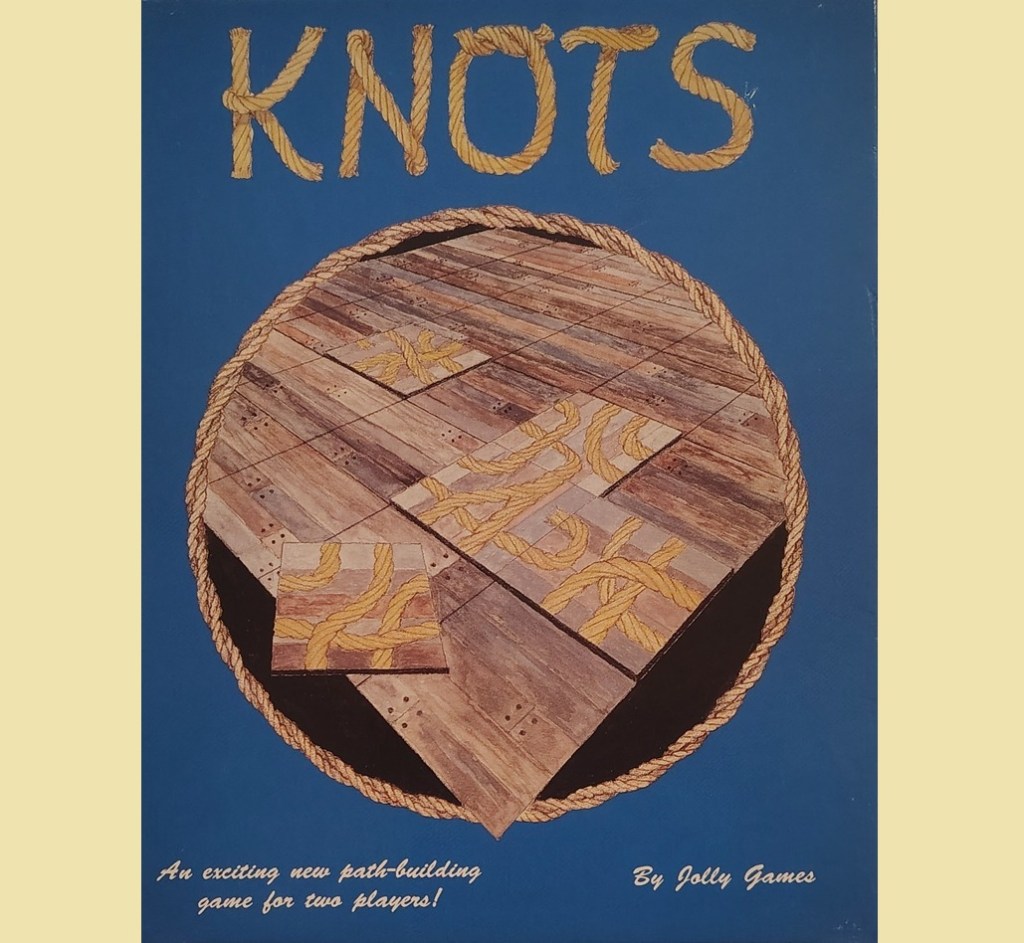
I picked up Knots at the Dragon Flight Game Conference in Bellevue, Washington, with every intention of bringing it to the table for a game night with a friend. Unfortunately, plans have a way of changing, and my friend was unable to make it. I had been looking forward to trying my new game, though, and the little box was still sitting there, waiting to be opened. Rather than put it away for another evening, I decided to see what sort of adventure I could have with a handful of rope and a quiet table all to myself.
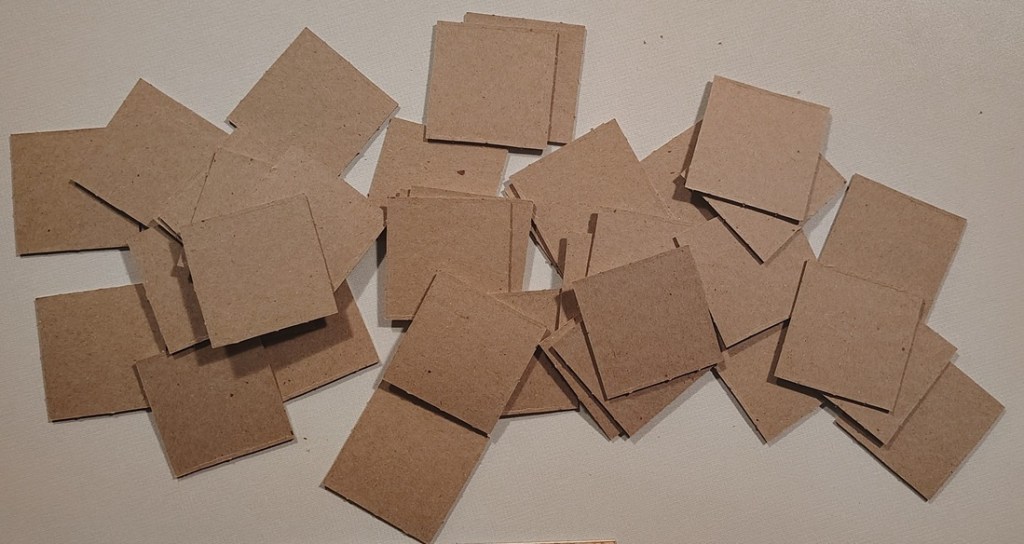
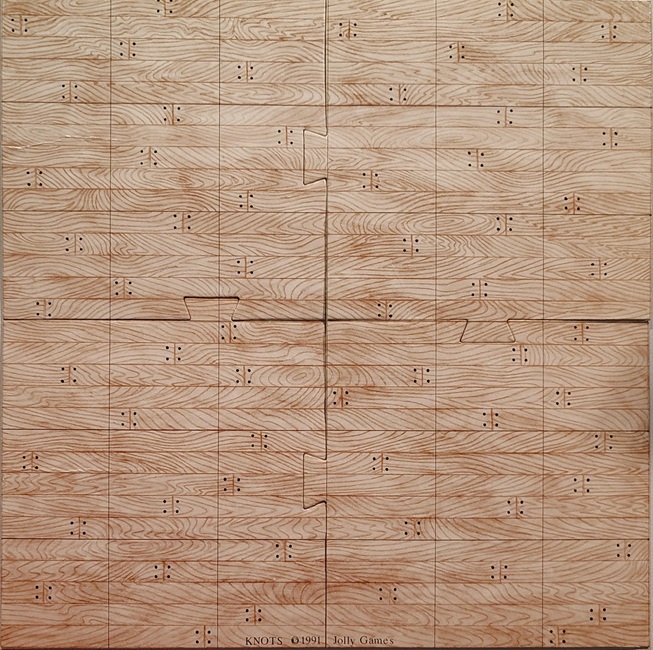
Knots is a small two-player strategy game with a rather charming collection of pieces. Inside the box are forty square tiles illustrated with winding lengths of rope, a little bag for drawing them, and four jigsaw-style board pieces that fit together to create a six-by-six grid. The ropes curl across the tiles in all sorts of directions. Some travel neatly from one edge to another, while others bend around corners, come to an end, or join neighboring strands. There are also two pages of rules and a small errata card, but it was those forty little rope tiles that caught my attention. I rather liked assembling the board and looking at all those empty spaces, wondering what sort of tangled creation would eventually fill them.
The game itself has a wonderfully simple goal. Two players are each trying to connect opposite sides of the board with a continuous length of rope. One works from north to south, while the other tries to connect east to west. Each player keeps three tiles in hand, choosing one to place on an empty square before drawing another from the bag. The first to complete a connection wins. There are no complicated resources to collect or points to count, just a little board and two people trying to find their way across it.
Of course, I was missing the second person, so I decided to make a puzzle of it instead. I would see whether I could build a continuous rope path from one side of the board to the other, taking my time with the tiles and following wherever the winding lines led me. It seemed like a pleasant enough challenge, and I was curious to see how the pieces would work together without another player trying to interrupt my plans.
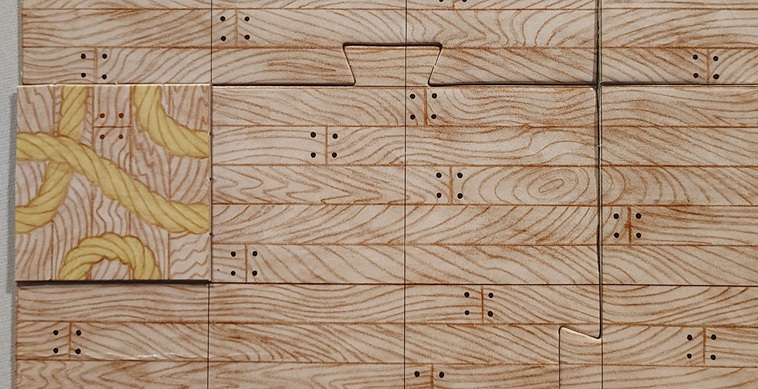
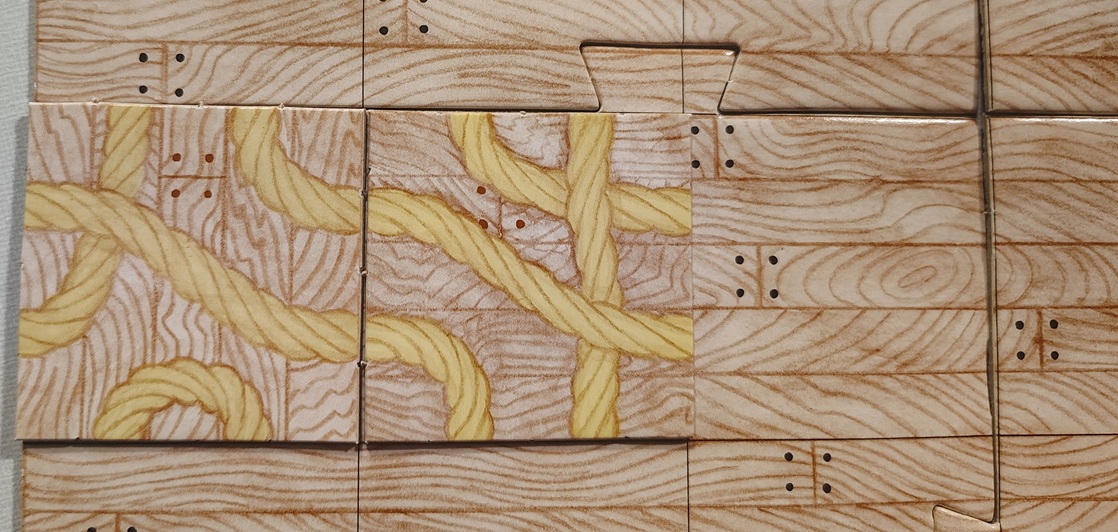
I began placing tiles and watching the rope slowly find its way across the board. Some pieces were wonderfully cooperative, connecting neatly with the tiles already in place. Others required a little more thought. A rope might curve in an unexpected direction or join another strand in a way that changed the path entirely. I found myself turning the tiles, studying their illustrations, and imagining how each one might fit into the growing pattern.
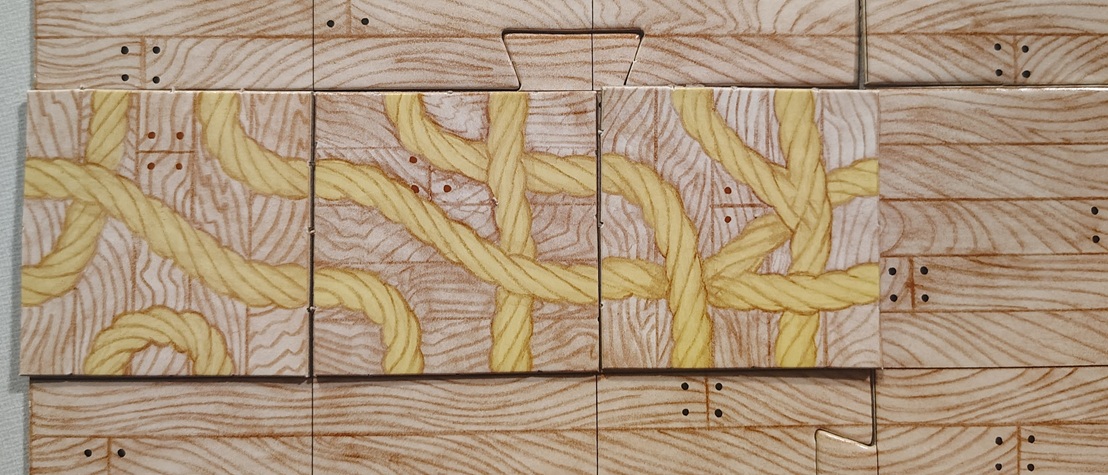
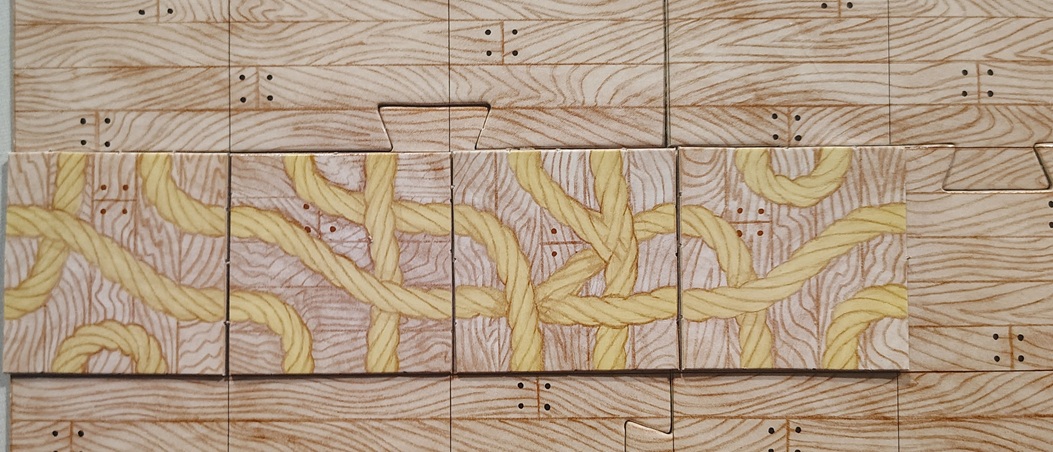
There is something satisfying about a game that lets you watch a picture develop as you play. At first, the board held only a few scattered pieces of rope, with plenty of empty spaces between them. Gradually, the lines began connecting, curling around one another and forming little pathways across the grid. What had started as a collection of separate tiles was becoming something that looked almost woven together.
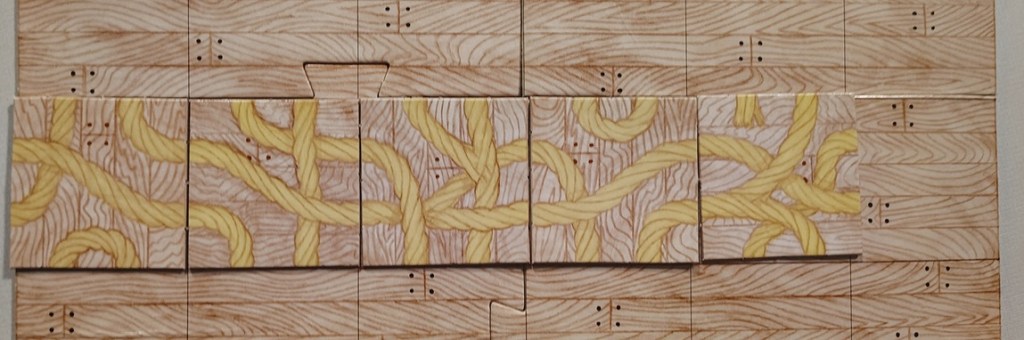
The challenge was not simply finding a tile that fit. I had to think about where the rope would travel next, and whether a connection that looked promising would actually lead toward the opposite edge. Sometimes a piece seemed perfect until I followed its rope a little farther and discovered that it had taken me somewhere I had not intended to go. Other times, a tile that looked rather unremarkable turned out to be exactly what I needed.
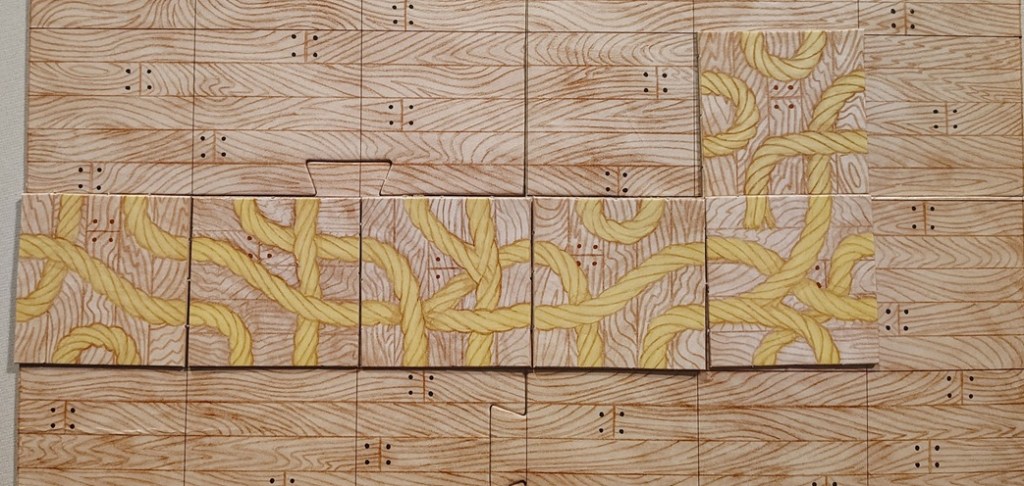
As the board filled, the paths became more interesting and a little harder to follow. The ropes crossed, curved, and occasionally disappeared toward the edge of a tile before continuing onto the next. I was concentrating on reaching the far side, and for a while it seemed that everything was going rather well. My rope was making its way across the grid, and I could see the destination getting closer.
Eventually, I reached the opposite edge of the board.
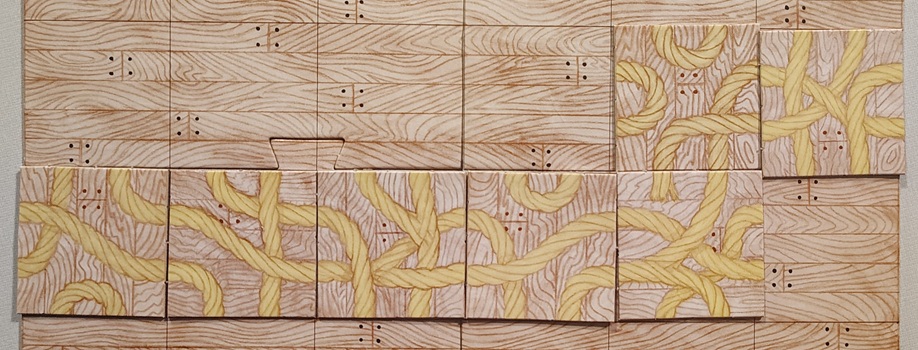
I thought I was finished.
Then I looked more carefully and realized that there were still two loops I needed to complete. I had managed to get my rope across the board, but the path was not quite as complete as I had believed. Those little loops had been hiding among the other lines, and I had overlooked them while concentrating on getting from one side to the other.
This turned out to be the trickiest part of my evening. The rope was surprisingly difficult to follow in places, especially where it curved off the edge of one tile and continued onto another. My eyes would follow a line, only to discover that I had wandered onto a different section of rope. I found myself tracing the connections carefully, checking where each strand entered and left a tile, and trying to work out exactly what was missing.
It reminded me a little of untangling a necklace or a piece of string that has somehow tied itself into a knot while sitting perfectly still. You can see where the ends are supposed to go, but somewhere in the middle there is a loop that refuses to cooperate. The more closely I looked at the board, the more I appreciated how much thought had gone into those little rope illustrations.
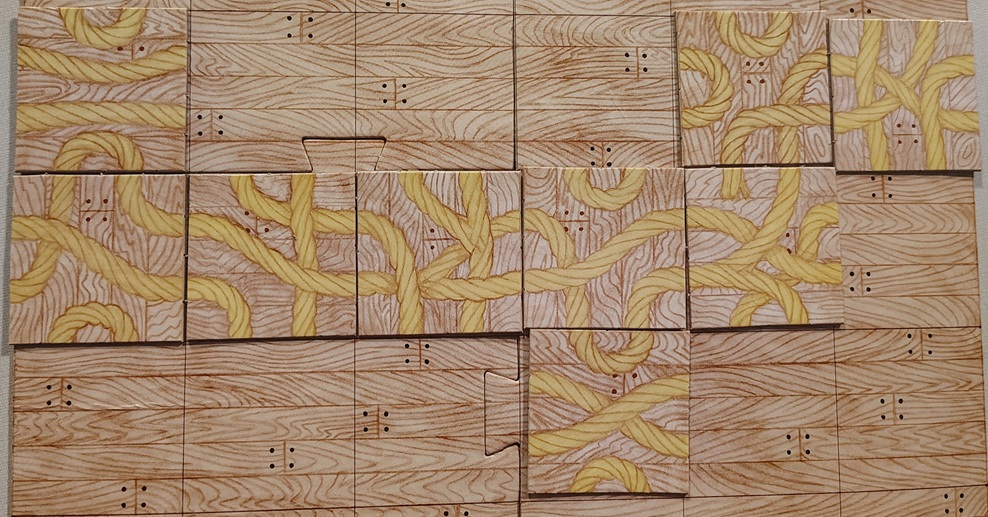
I eventually added a couple more pieces to finish the rope path and complete the troublesome loops. It was not quite the tidy finish I had imagined when I first reached the opposite side, but I enjoyed working through the problem. There was something especially satisfying about finally seeing the connections come together after spending so much time trying to follow them.
Once I had finished, I sat back and looked at the board. The empty grid I had assembled at the beginning of the evening was now covered with curling ropes, little crossings, and unexpected turns. It was a rather lovely pattern, especially considering that it had been created one small tile at a time. I could trace the path I had built and see the places where I had taken a detour or needed another piece to bring everything together.
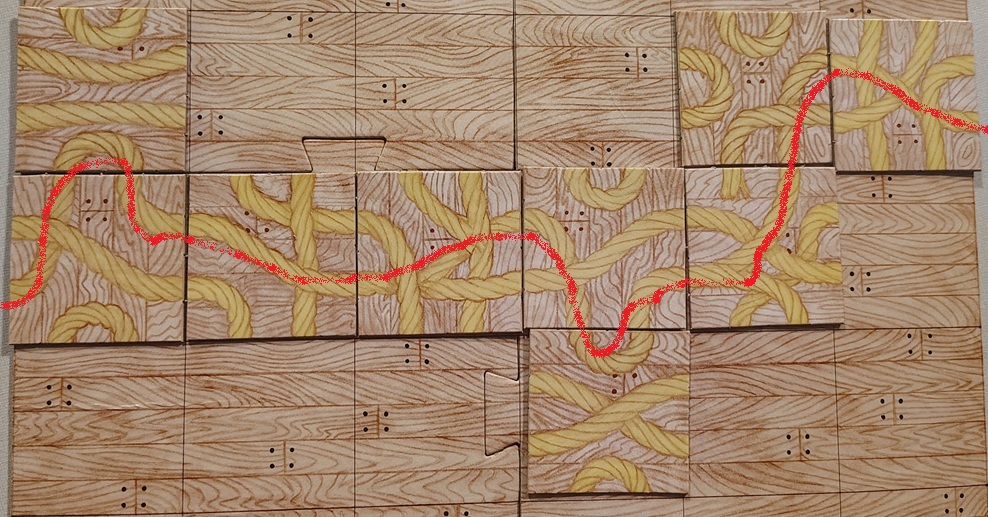
Playing alone was certainly different from the experience Knots was designed to provide. With another person at the table, every tile would become part of two competing plans. A connection that helps one player might also help the other, and a space that looks wonderfully useful could disappear before you have a chance to claim it. I can imagine how much more interesting those choices become when someone else is working toward a different edge of the board.
I am still looking forward to playing Knots with my friend. I suspect having someone building a competing path will make me look at the board quite differently, and I am curious to discover whether I will be any better at following the ropes when there is another person making plans for them.
I brought Knots home from Dragon Flight expecting a little friendly competition. Instead, I spent an evening untangling a puzzle of my own. And I had a lovely time doing it.

