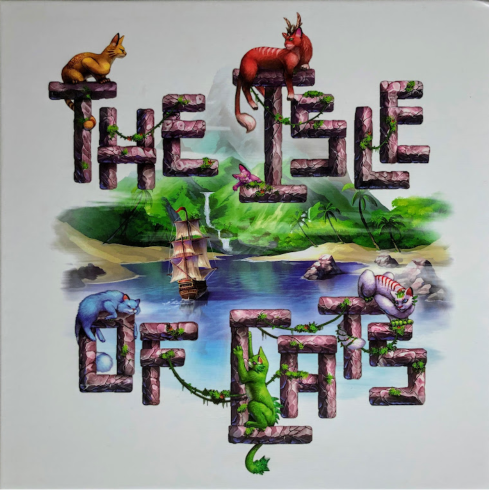
I have played The Isle of Cats before, but I have decided I want to get really good at it. Not just better at fitting one particularly awkward cat into one particularly awkward corner, although that would certainly help. I want to understand why one boat scores beautifully while another, equally crowded boat somehow does not. Lately, I have been using the Steam version to practice, playing against one Easy AI opponent and giving myself room to experiment. As I get better, I can increase the difficulty, but for now I rather like having a patient opponent who does not mind while I try things.
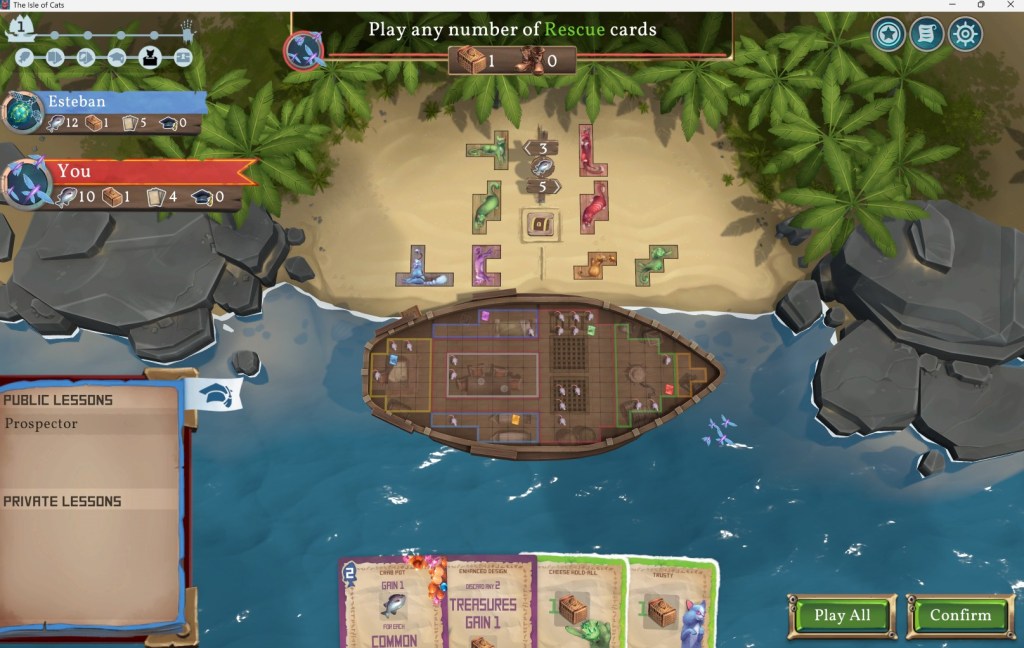
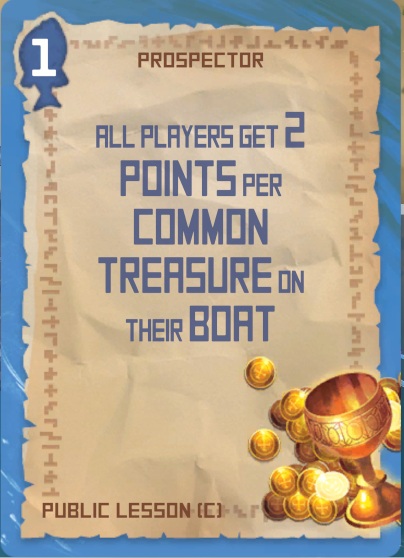
My first game gave me plenty to think about. I drew the Prospector card early, which was a lovely start, and I also had an Anytime card that allowed me to exchange a basket for two treasures. I am usually quite fond of treasures, so this seemed like exactly the sort of opportunity I wanted. There was just one small problem. My opponent took the piece I needed for that second treasure.
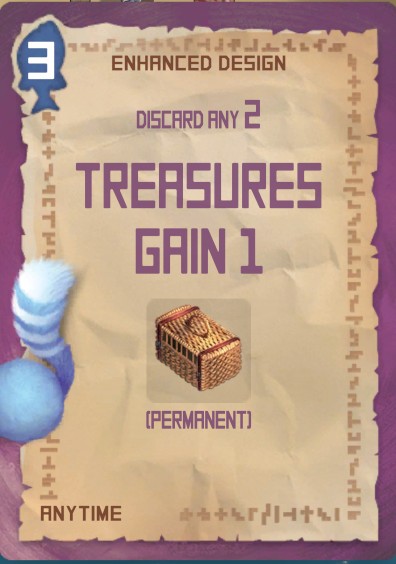
There is something almost personal about watching the exact piece you wanted disappear onto somebody else’s boat. Of course, the AI had no idea that it had ruined my lovely little plan. It was simply playing its game. I, however, knew exactly what had happened.
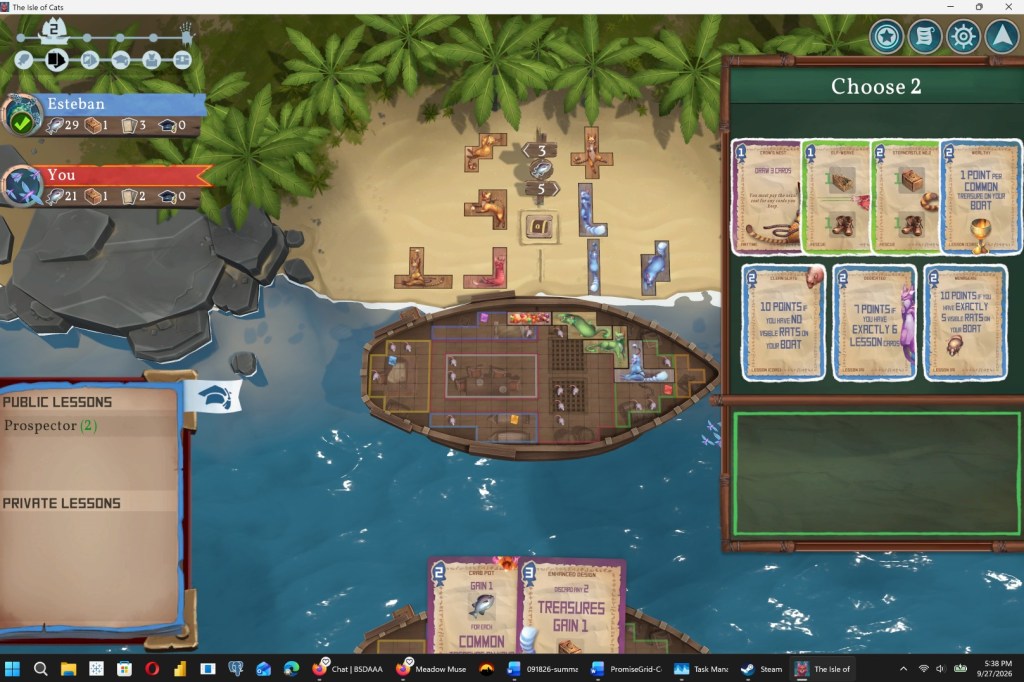
By round three, I finally managed to gather enough treasure to get that third basket, but I felt woefully behind. This was not developing into the kind of Isle of Cats game I normally play. I often collect a great many treasures, and I am always happy when the lesson for leaving the dining room empty finds its way into my plans. Fifteen points for an empty dining room can make that particular patch of uncovered boat feel much less neglected. This time, no such luck.
Instead, I had to pay closer attention to what the game was actually giving me.
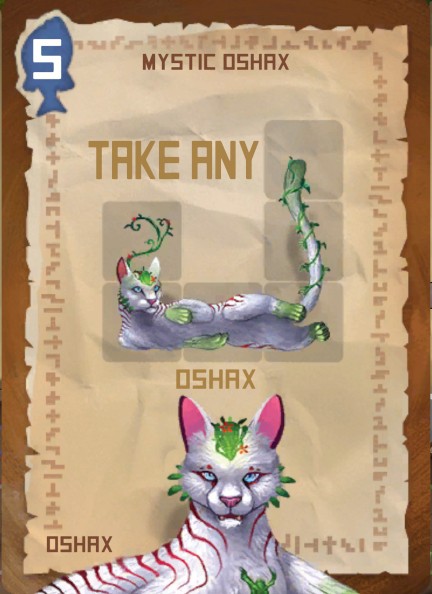
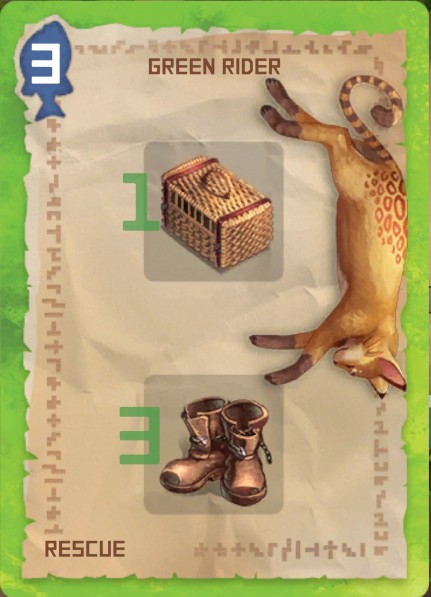
That may have been the most useful part of playing digitally. When I play the physical game with friends, I am enjoying the table as much as I am studying my strategy. There are cats everywhere, cards being passed around, fish disappearing, treasures being claimed, and other rescuers doing interesting things with their boats. On Steam, I can slow my thinking down a little and ask why I am making each choice.
The cats still matter, of course. They are the reason we are here, and I am never going to object to filling a boat with cats. But this game made me think much more carefully about the difference between having a lot of cats and having the right cats for the lessons I was building around.
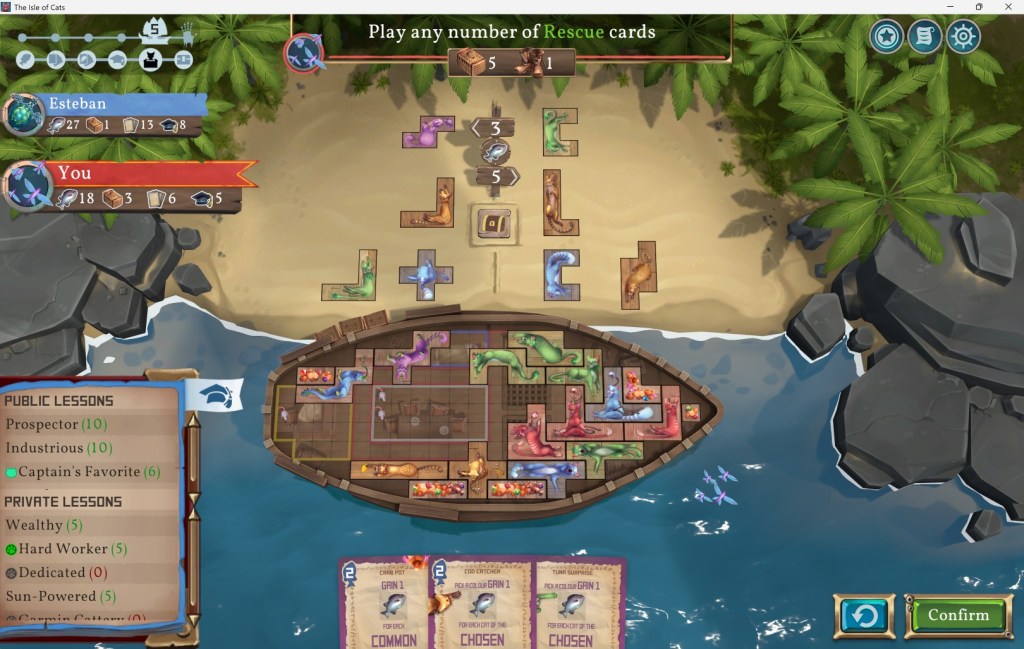
Green became particularly important to me.
I managed to create a family of five green cats. A family that size is already valuable, but I also had cards that made those green cats work harder for me. I was able to use an Anytime fish card that gave me one fish for every cat of a color I selected, and I had two of those opportunities. With a growing green family on my boat, choosing green made those cards considerably more useful than they might have been earlier in the game.
Then there were points tied directly to those green cats. I had a lesson that gave me two points for each green cat at the end, along with another bonus working in my favor. Suddenly, a green cat was not simply another tile filling a hole in the boat. It belonged to a family, helped another lesson, and supported the little scoring engine I had gradually built without entirely realizing that was what I was doing.
That is the lesson I am taking away from this game.
It is not simply how many cats you rescue.
It is how well everything works together.
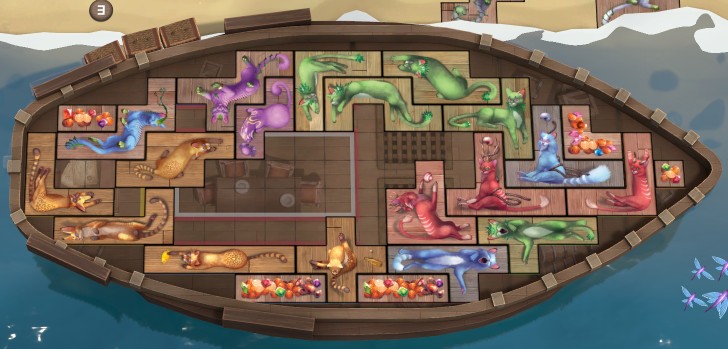
A cat can cover a rat, complete part of a room, join a family, satisfy a lesson, and make another card more valuable all at once. A treasure can be much more than a convenient shape for plugging a troublesome little gap. A basket spent at the right time can lead somewhere useful, while the same basket used simply because it is available may not do nearly as much.
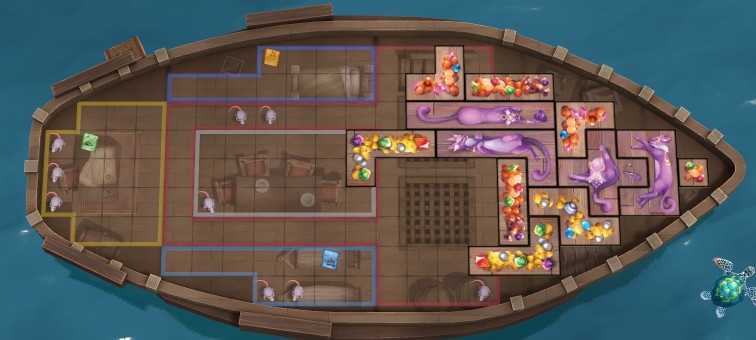
My boat certainly was not perfect. Looking at it at the end, there were still uncovered spaces, including a fairly substantial area through the middle. Ordinarily I might have looked at that and assumed I had not done particularly well.
The scoring told a different story.
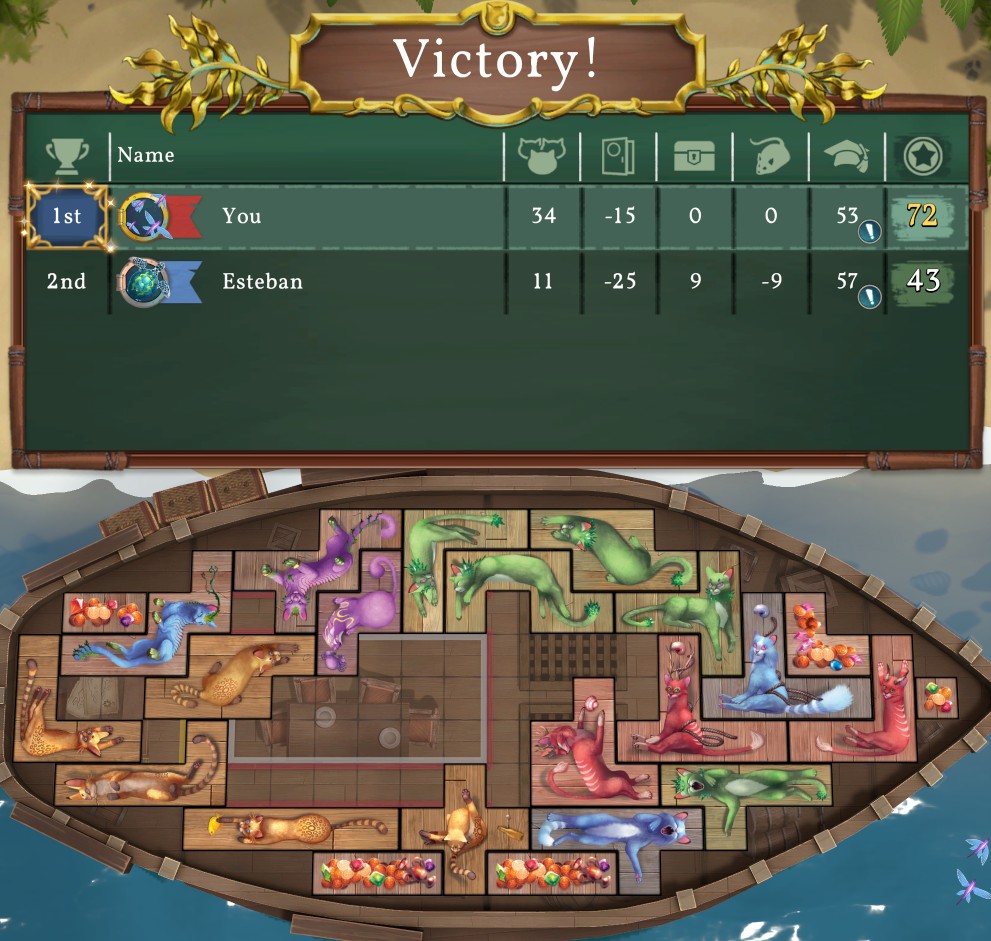
I finished with 72 points, while Esteban, my Easy AI opponent, finished with 43. What interested me was not simply the 29 point difference, but where those points came from. I scored 34 points from my cat families, compared with Esteban’s 11. That alone told me that the cats I had collected were working together rather than simply occupying space.
I also lost 15 points from 3 uncovered rooms in my boat. Esteban lost 25. Neither of us had produced one of those beautifully packed boats where every last corner seems to have been claimed by a tail or a treasure, but my gaps hurt considerably less.
The lessons were where the game really became interesting. I earned 53 points there, while Esteban earned 57. He actually beat me on that part of the scorecard. My advantage came from combining a strong lesson score with much stronger cat families and fewer penalties. I had spent much of the game feeling behind, yet the pieces of my strategy were quietly adding up.
That is exactly why I want to keep practicing.
The Isle of Cats looks so much like a puzzle about filling a boat that it is easy to judge yourself by how full the boat appears. I am beginning to think that is only the first layer. A beautifully packed boat is wonderful, but a clever boat is better. I want the green cat that belongs beside the other green cats and also satisfies a lesson. I want the treasure that solves a space problem while helping something else. I want each choice to do two jobs when I can persuade it to.
Playing against the Easy AI gives me a nice place to learn that without turning every game into a test. I can try a lesson I might normally ignore. I can see what happens when I commit more heavily to one color. I can make a mistake, finish the game, look at the scoring breakdown, and understand a little more about what that mistake actually cost me.
Eventually, I will turn the difficulty up. For now, I am rather enjoying rescuing cats with Esteban, my digital friend. He stole my treasure. I won by 29 points. I think we are even.

