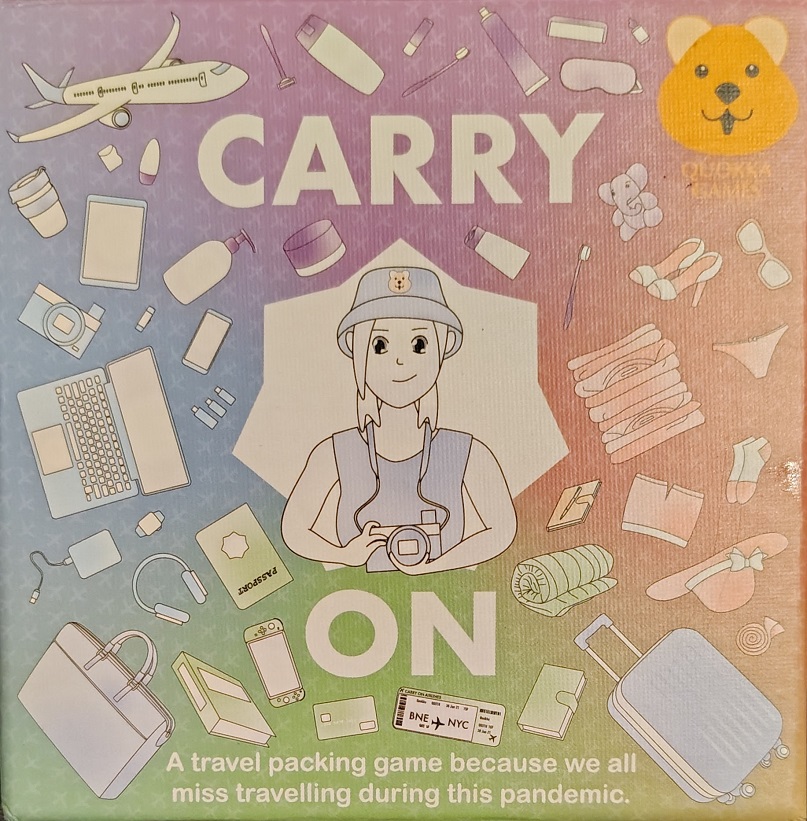
There is a certain kind of searching that happens at a convention, a gentle drifting from table to table, listening for something that feels just a little quieter than the rest. Not silent, never silent, but softer. A place where the story might unfold without needing to be announced.
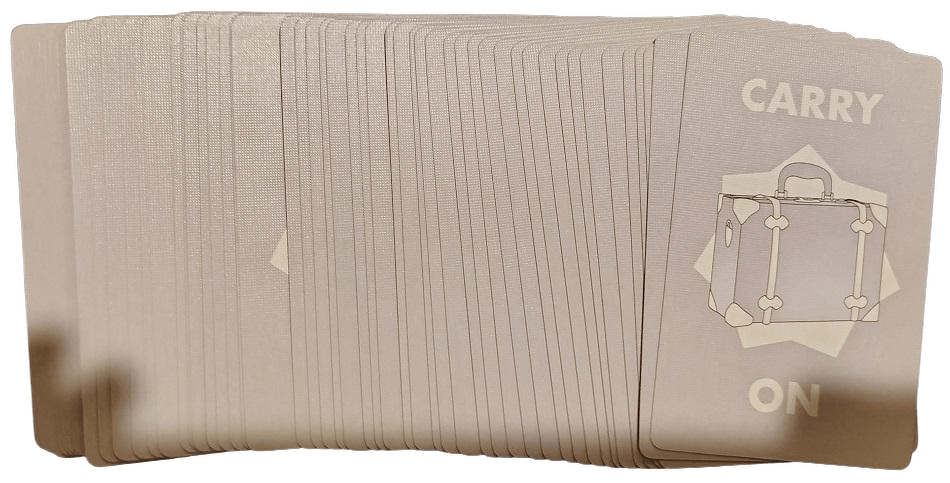
I found Carry On in one of those spaces, where the edges of the room seemed to hold their own kind of calm. The cards were already gathered, waiting, their backs turned upward like closed suitcases not yet opened.
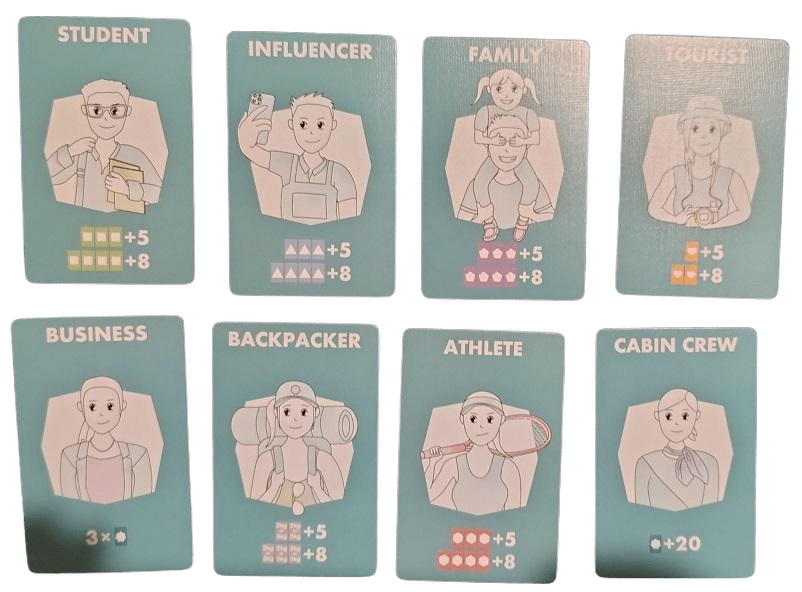
There is something quietly intimate about preparing for a journey, even an imagined one. Before anything begins, you are given a role, a small identity to carry with you. A student perhaps, or a traveler with a camera, or someone carefully balancing the needs of a family. Each one suggests not just what you might pack, but how you might think, what you might prioritize, what you might be willing to leave behind.
The act of packing begins simply. You choose one thing, place it gently before you, and pass the rest along with a soft declaration to carry on. It is a small ritual, repeated again and again, and with each pass the shape of your journey begins to emerge. A few necessities find their place. A few indulgences slip in when no one is looking. There is always the quiet question of whether you have chosen wisely.
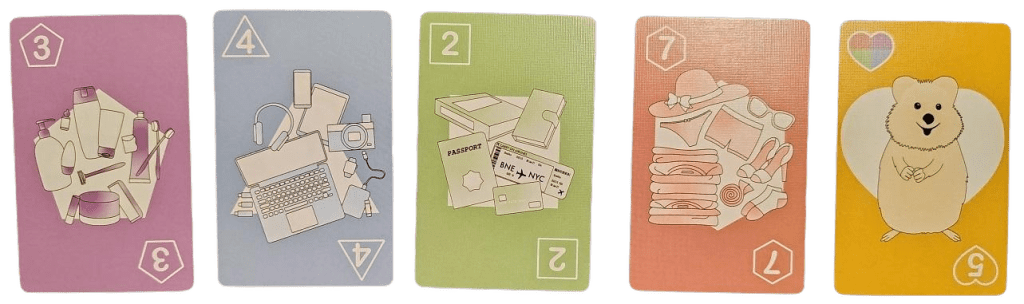
What I found most lovely was how quickly the choices began to feel meaningful. A simple collection of objects becomes something more, a reflection of intention. You begin to notice what you are holding onto, what you are letting go, and what keeps returning to your hands as the cards circle the table. There is no rush, only a gentle building of possibility.
And then, almost without warning, the limits begin to matter.
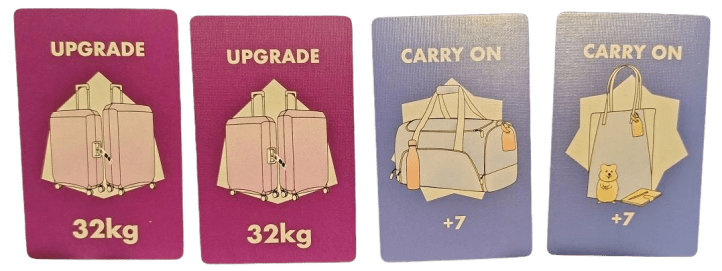
There is a weight to everything you have chosen, even the smallest things. Some are light and easy, others carry more presence, more consequence. You may find yourself reaching just a little further than you should, adding one more piece to your careful arrangement, hoping it will all still fit within what is allowed. It is a quiet kind of tension, the sort that sits just beneath the surface.
In the end, everything is revealed at once.
The suitcase you have been building is measured, not just in what it holds, but in how well it was chosen. There are moments of satisfaction, where everything seems to fall into place just as you had hoped. And there are moments of gentle regret, where perhaps one too many things found their way inside.
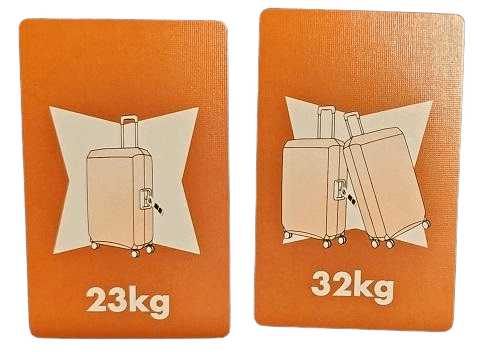
I had the chance to play this during a conference, and much like before, I chose not to interrupt the rhythm of the table for the sake of photographs. What you see here are the cards as they appeared afterward, gathered in small groups, as though resting after their journey. There is something I enjoy about that perspective, seeing not the motion itself, but the traces it leaves behind.
Carry On is not loud, and it does not demand attention. It unfolds quietly, one choice at a time, inviting you to consider what matters in the space you are given. It is a game of small decisions that gather into something meaningful, a reminder that even the simplest preparations can carry a story within them.

