I played Micro City last night, and it took a little time before I understood what it was asking of me.
At first, it seems small. Everything is visible. The board, the pieces, the few resources you will be working with. It gives the sense that nothing here is hidden, and that what needs to be done will reveal itself quick. That impression does not last very long.
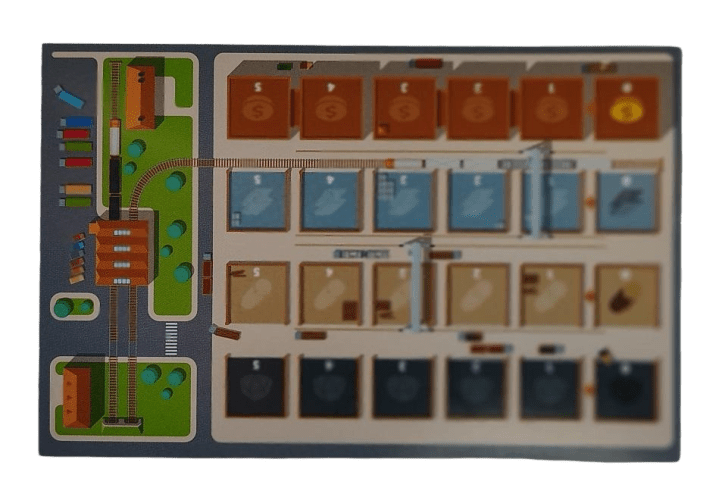
The city is laid out in a way that feels orderly, almost inviting. Districts sit beside one another, connected, reachable. It looks like a place where movement should be simple.
But once you begin, you start to notice the distance between things. Not physical distance, but the kind that comes from needing the right conditions at the same time. Where you are, what you have, and what you are able to do rarely line up as cleanly as you expect.
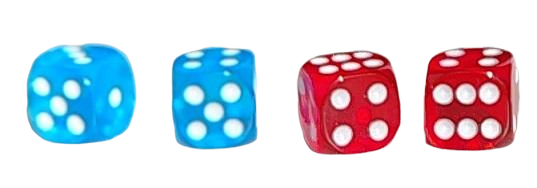
Each round begins with a roll, and the outcome is never quite as generous as it first appears. You are given options, but only just enough to make the next step possible, not comfortable.
That is when the city begins to feel less like a layout and more like a constraint.
You move your engineer through it one space at a time, not wandering, but trying to line things up. A position that allows you to gather what you need, or to use what you have been holding onto.
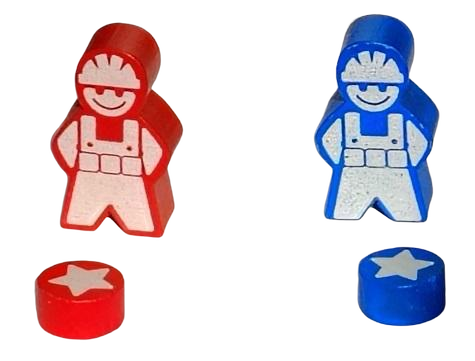
There is a steady sense that you are arriving either slightly too early or slightly too late. The resources themselves are simple enough when you look at them on their own.
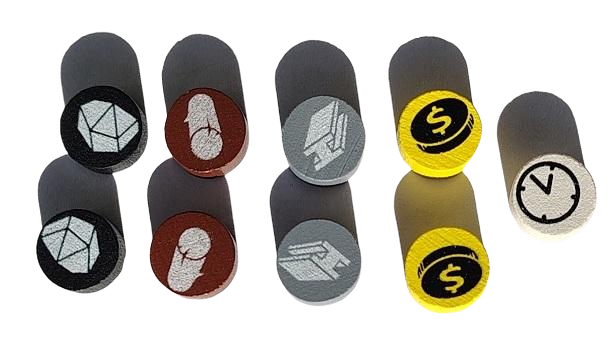
But they do not stay simple for long. You gather one, then realize another was needed first. You trade, adjust, reconsider. What seemed like progress shifts into preparation for something that still has not quite come together.
The board keeps track of all of it without comment.
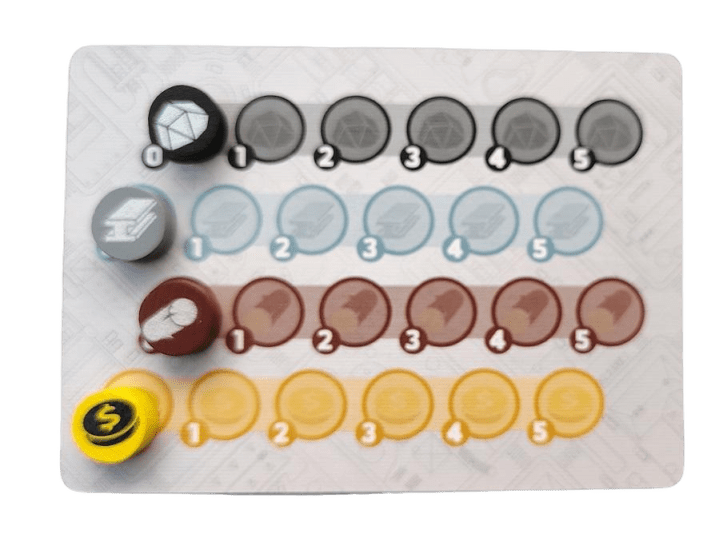
You begin to understand that the game is not about collecting more, but about aligning what you already have. Enough of the right things, at the right time, in the right place.
That alignment is harder than it looks.
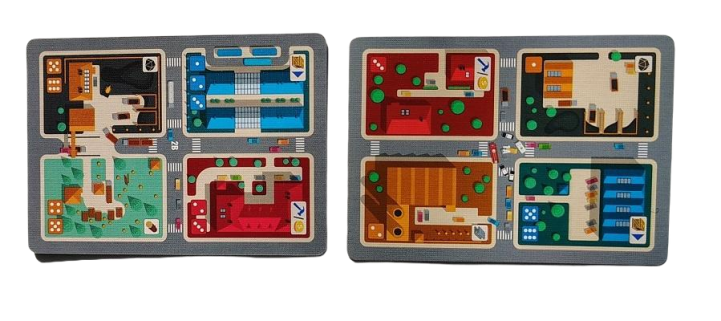
Most of what you do is shaped by the cards you choose to use.
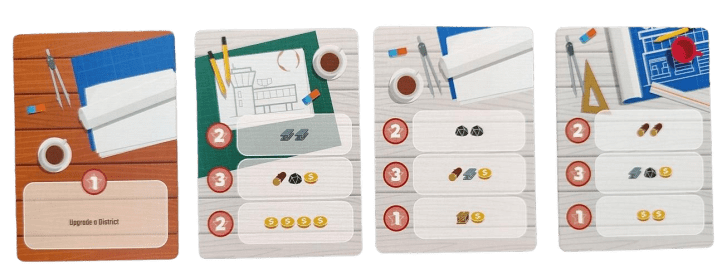
They offer movement, small advantages, and the occasional moment where things feel like they might finally fall into place. But even then, it is never certain. Each decision closes off other possibilities, even as it opens one.
There is always something left undone, something you chose not to take. Time continues to move, whether your plans are ready or not.
You feel it more as the rounds pass, not as pressure exactly, but as a narrowing. Fewer chances to correct a mistake, fewer turns to bring things together.
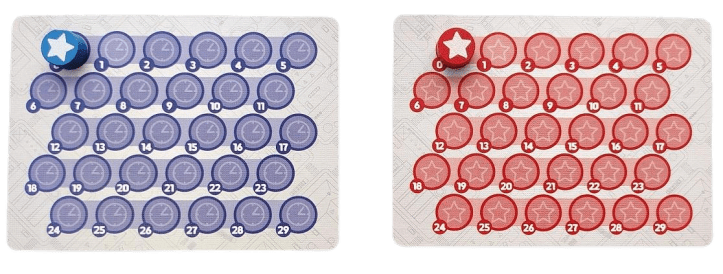
That pressure is constant, but quiet. You notice it most when a turn does not quite come together. When you needed one more piece, or one more step, and the game does not give it to you. And then, when it works, something small becomes real.
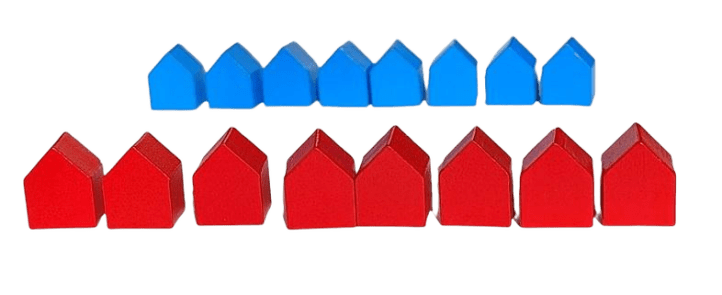
The buildings are not large, but they carry the weight of everything that came before them. The movement, the gathering, the waiting for the right moment that almost did not come.
Looking back across the city, it begins to feel less like a board and more like a record of decisions.
Not all of them perfect, but all of them necessary. Even the pieces you did not use seem to hold some of that weight.
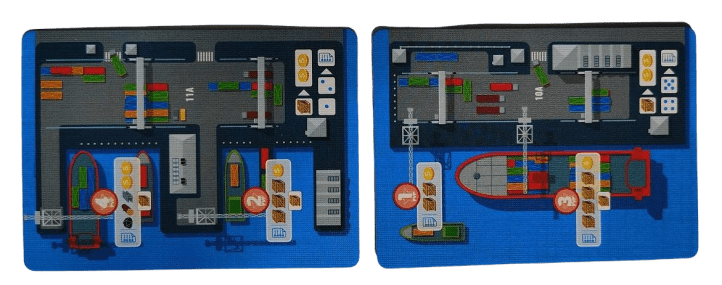
They are reminders of what might have been done differently, or simply what never came into reach.
By the end, the game does not feel resolved so much as complete. Not because everything worked, but because what could be done has been done.
Micro City does not ask for more than that.
It gives you a small space, a short amount of time, and a set of possibilities that never quite settle into certainty. And then it lets you see what came of it.
 GameShoutOut