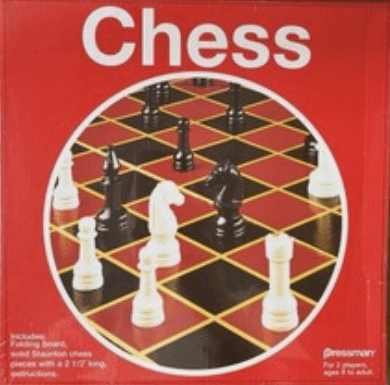
I am not good at chess. I want to say that plainly, because I am about to gush, and you should know the gushing comes from someone who still hangs her queen roughly once an evening. Chess has survived a thousand years and a thousand passing fads, and it remains the quiet benchmark every other strategy game measures itself against. No luck, no hidden cards, just two minds and thirty two pieces.
The moves take an afternoon to learn. The rook runs in straight lines, the bishop on diagonals, the knight in its strange little hop, the queen everywhere she pleases, and the goal never changes: corner the enemy king so it cannot escape. That is checkmate, and everything between the first move and the last is a slow duel of plans, traps, and sacrifices.
What makes chess immortal is the gulf between learning it and understanding it. A beginner like me sees pieces. A strong player sees threats and tempo and the shape of the whole board ten moves out, the way a musician hears a chord where I just hear noise. You can play your entire life and keep getting better, which is a rare and genuinely lovely thing to find in a game.
It is not warm or chatty, and it will humble you without apology. But the feeling of a plan quietly coming together, or spotting the one saving move with seconds to spare, is hard to match anywhere else. All it asks for is a board and a willing opponent.
I will not pretend it suits every mood, but anyone who loves games owes it to themselves to sit down with it at least once and lose honorably. Are you a careful positional player or a reckless attacker? Tell me below, and tell me about the game you are proudest of, win or glorious loss.
If purchasing the game, consider using the sites affiliate link: https://amzn.to/436PzRn
 GameShoutOut