
Today I played Azul: Stained Glass of Sintra. It is a beautiful and challenging expansion to the original Azul game, introducing new mechanics that enhance strategic depth without losing the elegance of the original design. The translucent tiles are not only visually stunning but also add a new dimension to gameplay, requiring players to carefully consider their moves and think several steps ahead.

The addition of the glazier mechanic and the ability to flip pattern strips makes the game more dynamic, offering players multiple paths to victory. The potential for negative points from broken glass adds just the right amount of tension, making every decision feel significant. Below is the beautiful bag that stores the pieces.

To play Azul: Stained Glass of Sintra builds on the original Azul game, offering new mechanics and beautiful, translucent tiles that represent the stained glass windows you’ll be creating. To setup, each player receives a player board with a window frame divided into columns. These columns are where you will place your stained glass tiles. The central board is set up with the Factory displays, similar to the original Azul, where tiles will be drawn from.

Players also receive pattern strips that are placed on their boards. These strips represent the designs you’ll be completing. The strips can be moved up or down within the columns, allowing for more flexibility in tile placement.
Once you’ve selected your tiles, you place them on your player board. The tiles must be placed on the column where your glazier marker is currently located. You can place all tiles of the selected color in that column, but you must follow the pattern strip’s requirements. After placing tiles, your glazier can move to any column to the right, but once moved, you can’t go back to previous columns unless you spend a turn resetting your glazier to the far left.

When a pattern strip is fully covered with tiles, you score points based on the number of tiles in the completed strip and any previously completed columns. The strip is then flipped over, and a new pattern is revealed for the next round.
If you take more tiles than you can place on your current pattern strip, the excess tiles are considered “broken glass” and are placed in the broken glass section of your board, leading to negative points at the end of the game. The game ends after a set number of rounds, or when a player completes their sixth column. Players tally their points, including bonuses for completing columns and penalties for broken glass. The player with the most points wins.
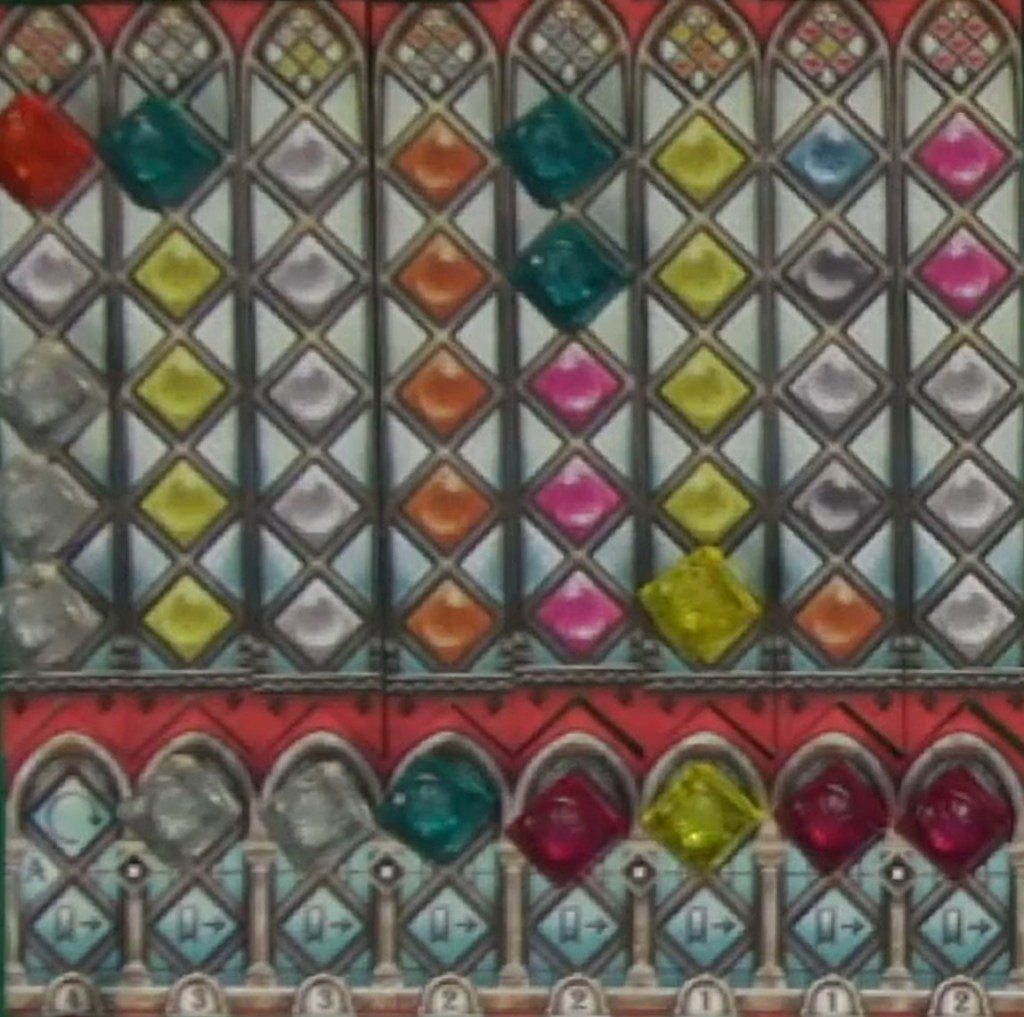
Overall, Azul: Stained Glass of Sintra is a fantastic expansion that builds on the strengths of the original while introducing fresh challenges and strategies. It’s perfect for players who enjoyed the original Azul but are looking for something that offers a bit more complexity and depth. Whether you’re crafting intricate stained-glass windows or strategizing to avoid broken glass, this game delivers a rewarding and visually stunning experience that’s sure to impress both casual and seasoned gamers alike.

This site uses affiliate link. To purchase, use the link: https://amzn.to/3M9xuJN
 GameShoutOut