
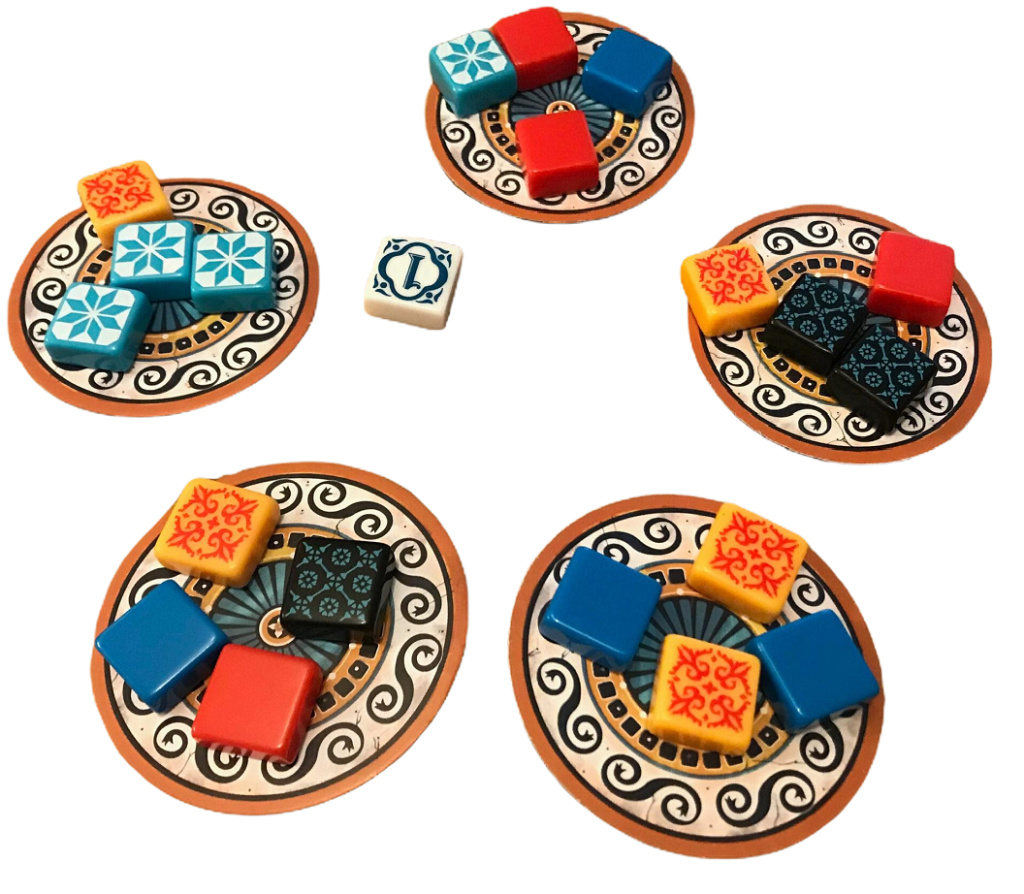
In Azul, we began by drafting tiles from the central factories. Each tile, whether a rich blue, vibrant red, or sunny yellow, felt like a piece of art. The challenge, however, lay not just in collecting these tiles, but in deciding where to place them on our boards. Each row could hold only one color, and any excess tiles would result in penalties, adding tension to every decision. Notice in the below photo that four tiles are grouped together around the table. We can either select from the center or chose a group, selecting only 1 color tile from the choice. Make sure to not take too many because having too many tiles counts against you.
Early on, I carefully selected my tiles to complete a row, while my friends did the same. The competition quickly heated up as we all eyed the remaining tiles, wondering if someone would snatch the color we needed before our next turn. This strategic depth became clear with each passing round. This was the board before scoring the first round.
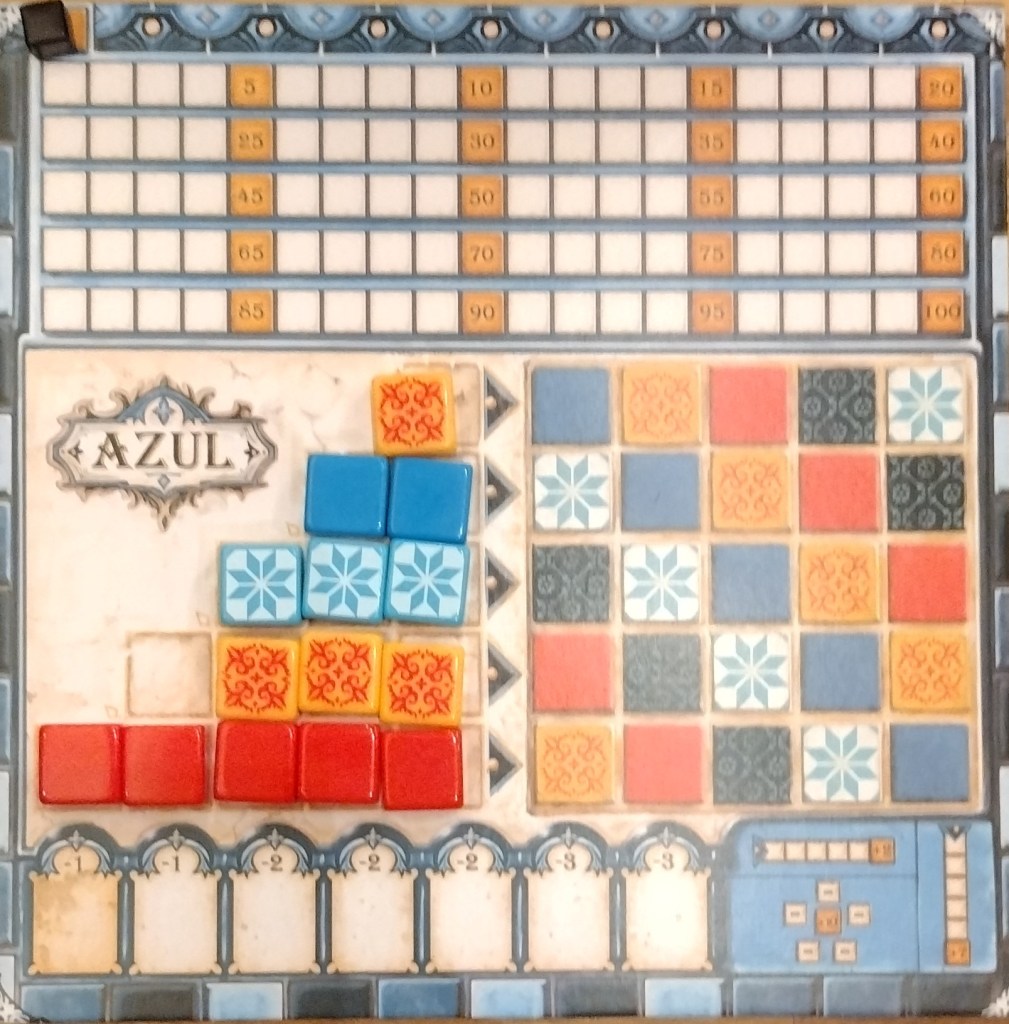
Midway through, the board was filling up, and every move became more critical. I completed a few rows, earning bonus points, but the scarcity of needed tiles added pressure. Taking too many of one color could result in wasted tiles and lost points, making each choice feel weighty. I decided to collect yellow tiles, so I figured this was a good selection.

As the game neared its end, we scrambled to complete our mosaics with the few tiles left, every decision feeling like it could make or break our game. In the end, my careful planning paid off, even if I didn’t win. The joy of seeing my finished mosaic and the satisfaction of a well-played game were rewards enough.

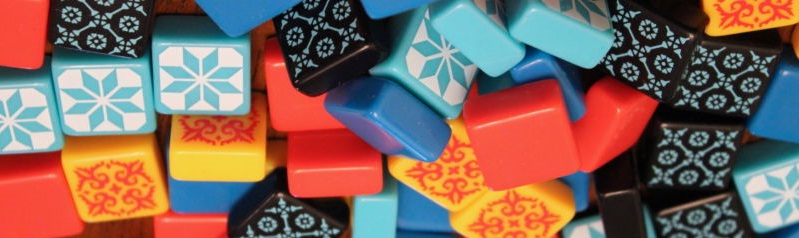
What struck me most about Azul was that the tiles are not just game pieces; they’re tiny works of art. The simple rules hide a surprising depth of strategy, where every decision about tile selection and placement carries weight. The tension of the drafting mechanic—fearing someone will take the tiles you need—adds excitement and challenge to each turn. And the balance between collecting enough tiles to complete your mosaic while avoiding penalties makes the game dynamic and engaging.
Azul is a gem, blending easy-to-learn mechanics with deep strategy and stunning visuals. Playing Azul with friends was as much about enjoying the process as it was about the game itself. We laughed, strategized, and admired each other’s mosaics, making Azul not just a game, but a shared experience that was both rewarding and fun.
This site uses affiliate links: https://amzn.to/3SLV1V3
 GameShoutOut