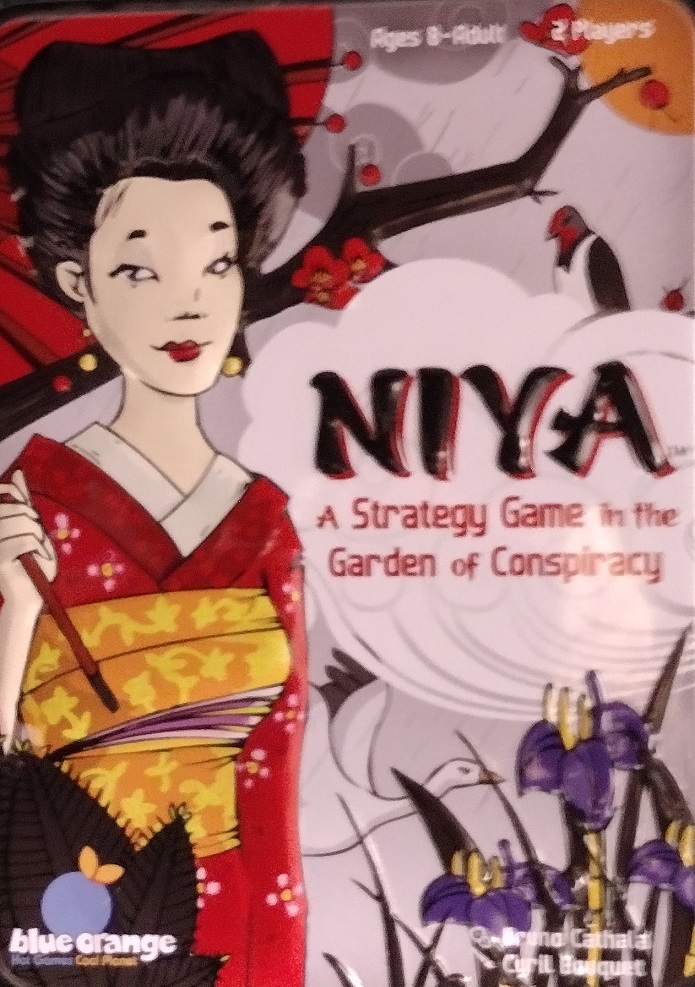
Niya, was the game I played tonight. It is a game where strategy blossoms quietly like a lotus in a serene pond. Our garden is a grid, comprised of 16 tiles, each adorned with a pair of symbols drawn from nature’s own hand—perhaps a poetic plum blossom paired with the gentle rustle of bamboo leaves. This grid, dear friends, is our field of silent battle.
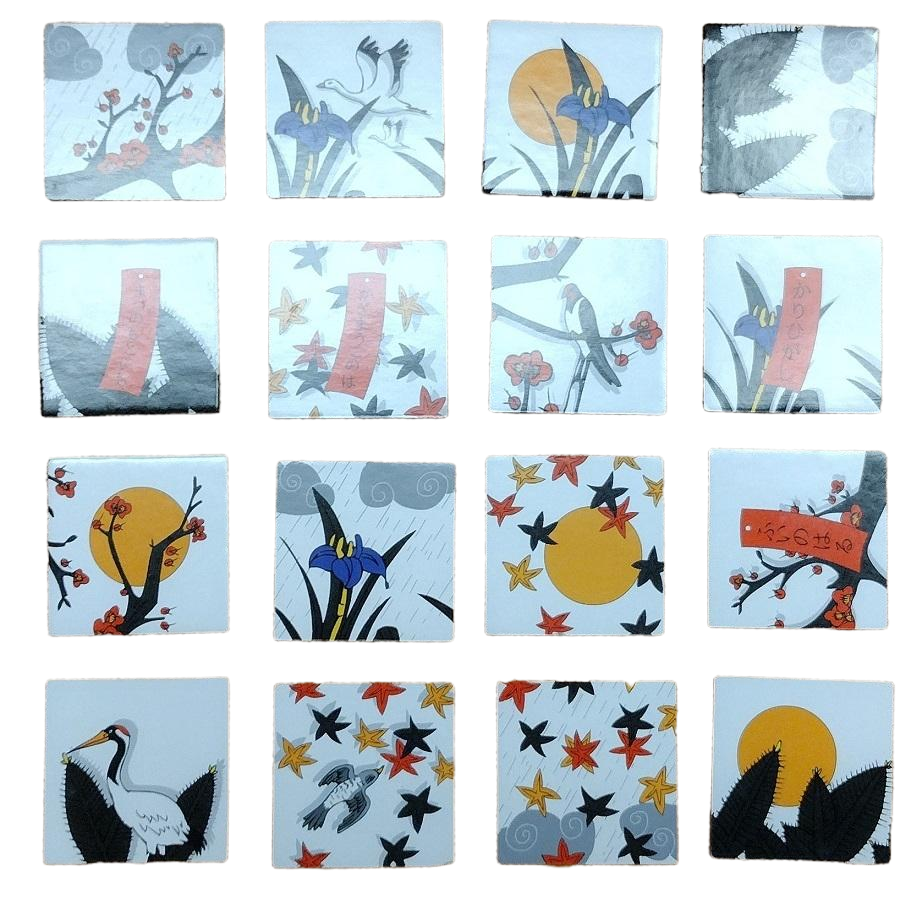
The first player selects any tile, a choice that sets the rhythm of the game. This chosen tile is removed, and in its place, a token is laid—a marker of territory claimed. The chosen tile’s symbols now guide the next player’s hand, for they must select a tile that shares at least one symbol with the one just taken. In this way, our moves are intertwined, a delicate dance of action and reaction.
The art of winning in Niya lies in pattern and foresight. One may seek to align four tokens in a row or cluster them into a square, patterns that resonate with the harmonious principles of Japanese aesthetics. Alternatively, victory can be a subtle affair, achieved by maneuvering one’s opponent into a position where they can no longer make a move, a strategic cul-de-sac from which there is no escape.

Niya, with its elegant dance of simple rules and deep tactical play, beckons the mind to sharpness as it soothes the soul with its artistic beauty. Each session is a brief yet profound meditation on movement and consequence, perfect for those times when one desires a retreat into a world where beauty and competition are entwined like vines in an ancient temple garden.
 GameShoutOut