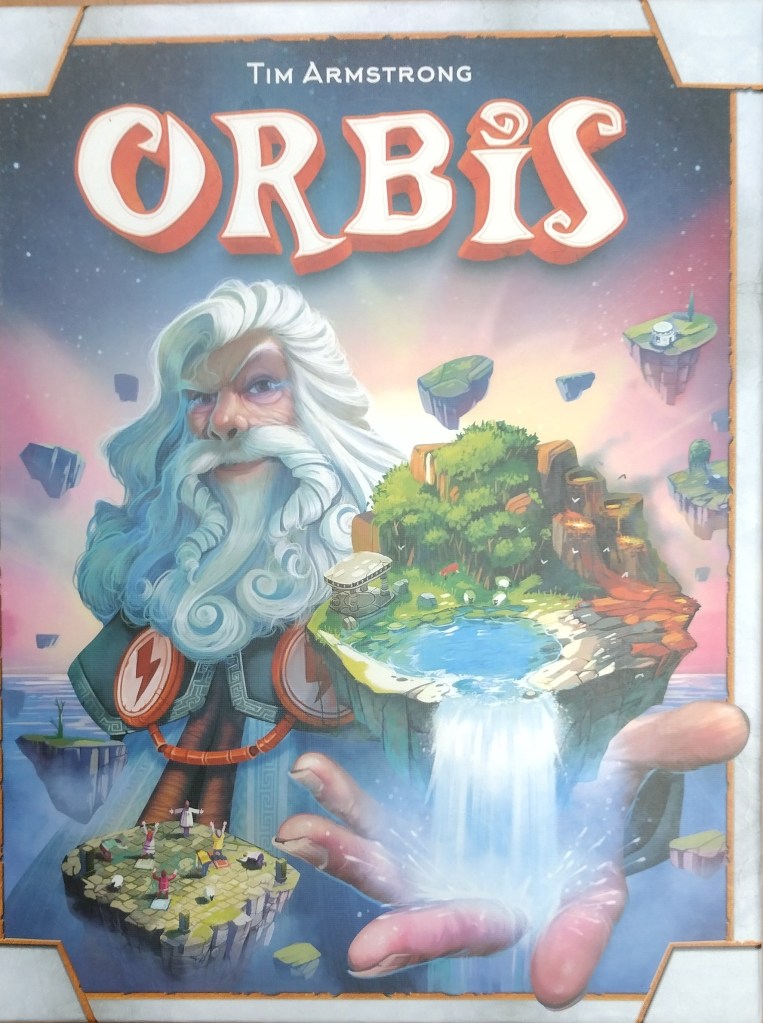
In the divine realm of Orbis, each player assumes the role of a god, crafting their own unique world from the void. The game unfolds across a tableau of tiles, each representing different types of landscapes – forests, mountains, fields, deserts, and waters. Our divine challenge? To strategically select and assemble these tiles, creating a universe that’s both bountiful and glorious. Here are some of the gods that were in our particular game.

The core of Orbis lies in its selection mechanics. Each turn, you choose a tile from the available selection in the center, adding it to your universe. These tiles aren’t just pieces of land; they’re homes for your worshippers, the loyal followers who empower your realm. Some tiles require you to spend worshippers to claim them, while others grant you new followers, resources, or even let you manipulate the game’s landscape to your divine will.
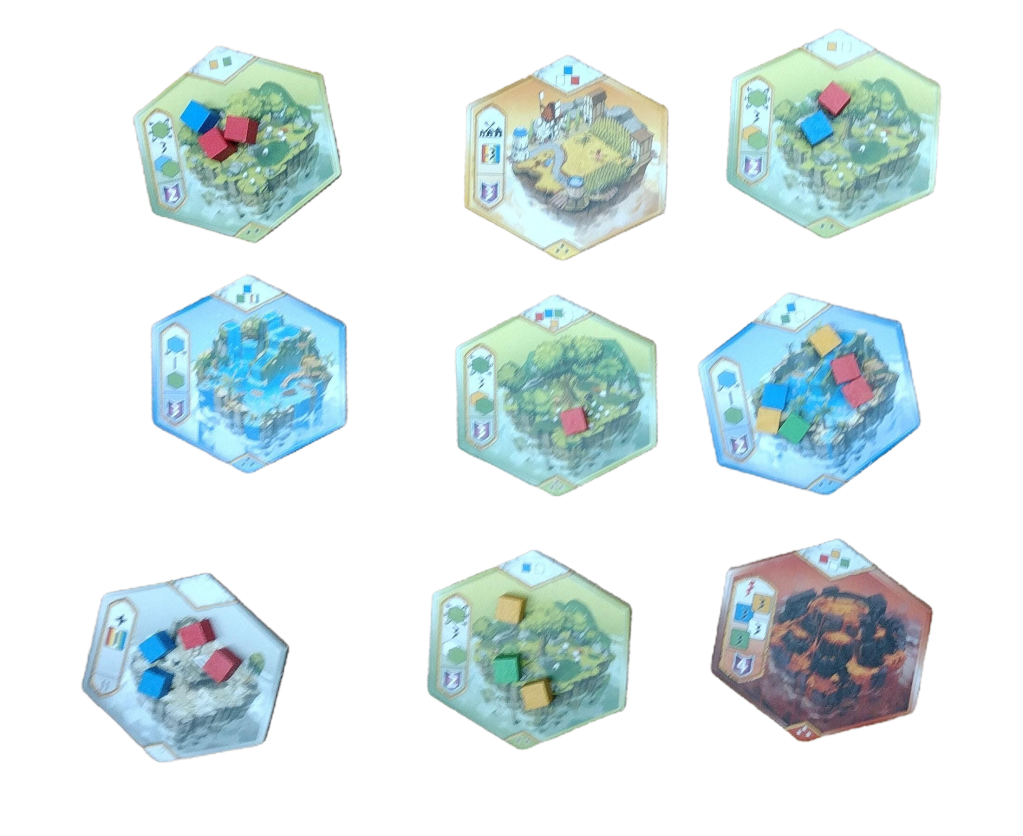
The goal is to meticulously build your universe over fifteen turns, ensuring that each tile’s placement not only maximizes your worshippers but also adheres to the sacred rules of adjacency. As the game progresses, you’ll also have the chance to claim god tiles, powerful entities that bestow special abilities and score you coveted victory points.
The winner is the god who amasses the most victory points, a combination of wisely chosen tiles, harmonious landscapes, and the adoration of your followers. It’s a dance of creation and decision, where every choice echoes through the heavens. This is what my pyramid looked like at the end of the game.

Playing Orbis was like painting the stars in the sky, each tile a stroke of color and each decision a brush with destiny. The game captivated us with its balance of simplicity and depth, each turn a step deeper into the divine.
 GameShoutOut