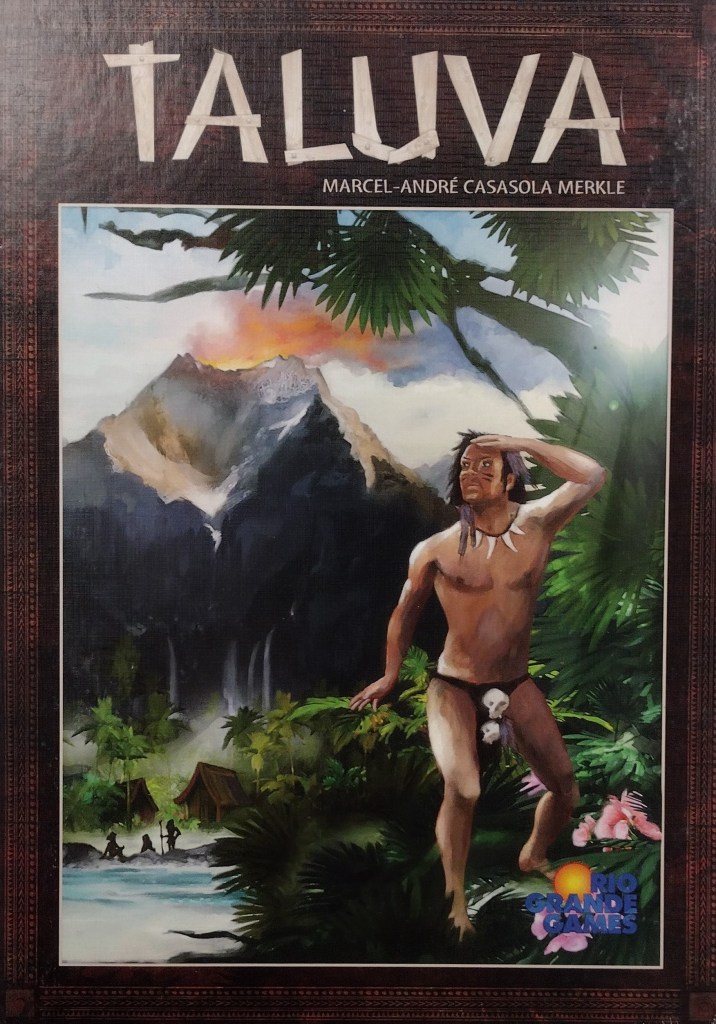
This weekend I played a new game. In Taluva, we find ourselves as rival tribes, in an ever-changing island landscape. The heart of the game lies in its tiles, each one a piece of the island’s terrain—volcanoes, jungles, lakes, and more, waiting for us to shape its destiny. The setup is a breeze, a canvas of possibility laid bare before us, with only the island’s first volcanic peak breaking the horizon.

Here’s how our adventure unfolds: On your turn, you’ll draw and place a terrain tile, each action altering the island’s topography. These tiles stack, creating majestic mountains and sprawling lands. The strategic twist? You must always place a tile adjacent to a volcano, simulating the natural growth and catastrophic changes of our island.
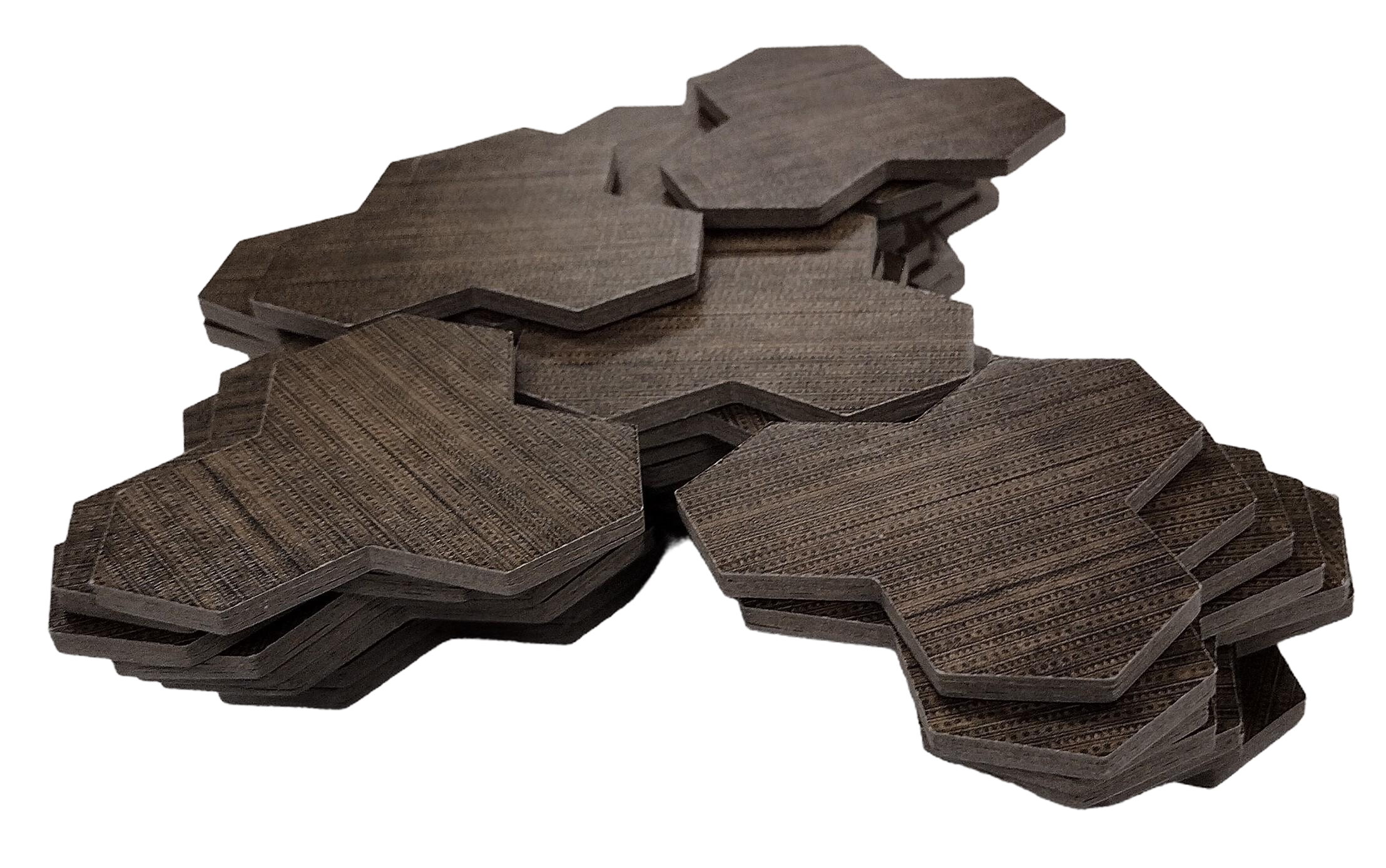
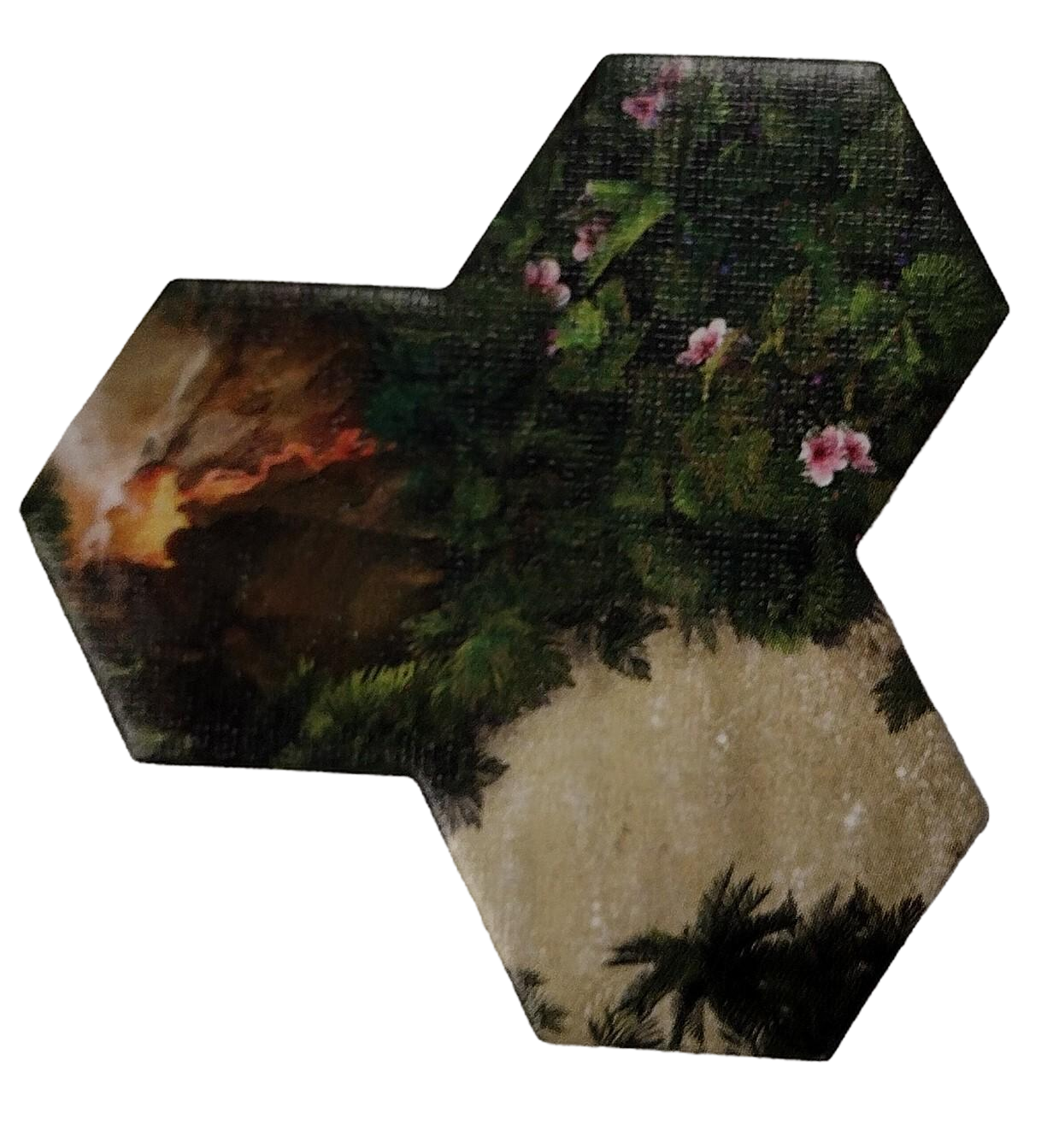
But Taluva is more than a game of beautiful destruction; it’s a dance of expansion and elevation. As we build, we also seek to establish our settlements—huts, temples, and towers, each a testament to our tribe’s presence and power. The challenge lies in choosing when to spread out across the fertile ground or when to build upwards, reaching for the skies to claim the higher ground. This is how the levels add to the settlement’s elevation.
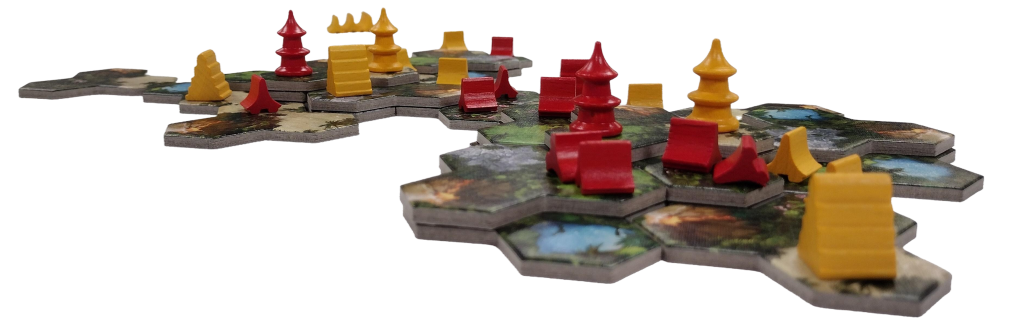
Winning in Taluva is a delicate balance of aggression and growth. Victory is claimed by the tribe that skillfully navigates the terrain to expand their settlements, all while blocking their opponent’s advances. The game ends when all tiles have been placed, and the player who has most strategically spread their settlements across the island’s diverse landscapes emerges as the victor.
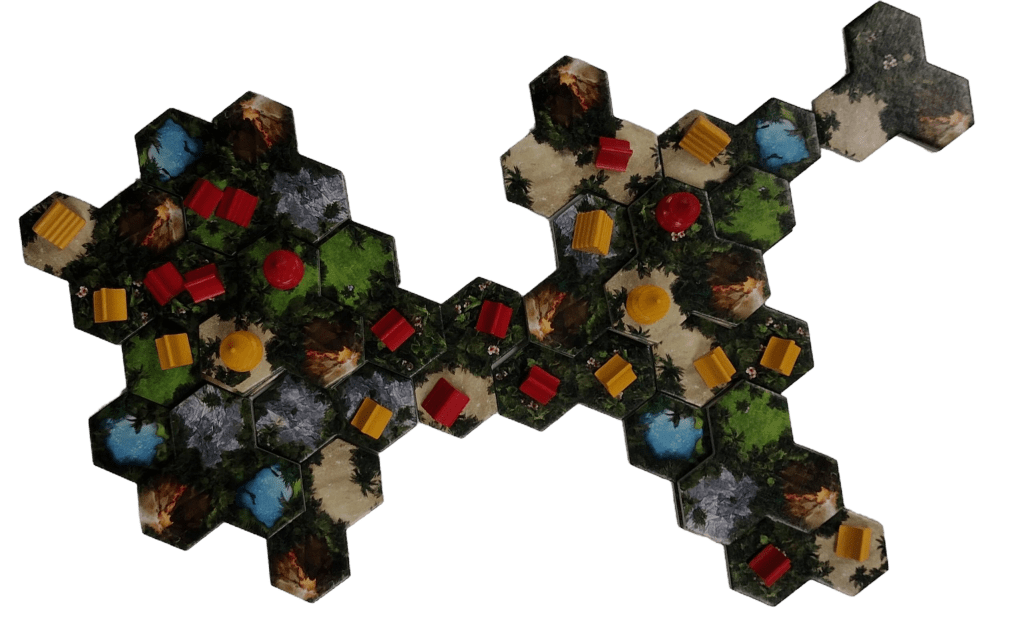
So, if you’re craving an escape to a land of beauty, strategy, and volcanic wonders, Taluva awaits. Gather your tribe, embrace the spirit of the island, and let the adventure begin. May your settlements thrive, and may your spirit soar as high as the tallest peak on the island.
 GameShoutOut